Materials Center Leoben Forschung GmbH

Mechanical Materials Testing

Whether it’s safety, durability, or functionality – mechanical properties determine the quality of a product. With many years of experience and state-of-the-art testing technology, we support you in reliably characterizing and assessing materials and components. We offer a broad range of mechanical test methods – standards-compliant, meaningful, and tailored to your specific requirements.

  • Fast, standards-compliant materials testing from an independent accredited laboratory – ideal for product development and series release

  • Increased component safety and service life through in-depth materials characterization

Our Services at a Glance

  • Hardness testing

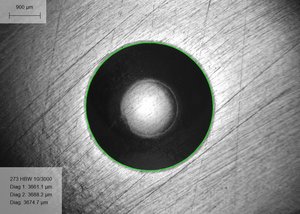
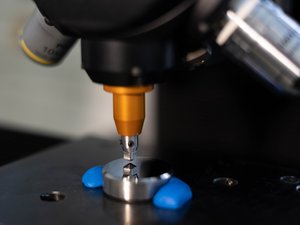
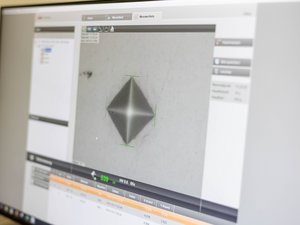
    Macro and micro hardness measurements (e.g. Vickers, Brinell), nano hardness measurements, etc.

  • Static materials testing

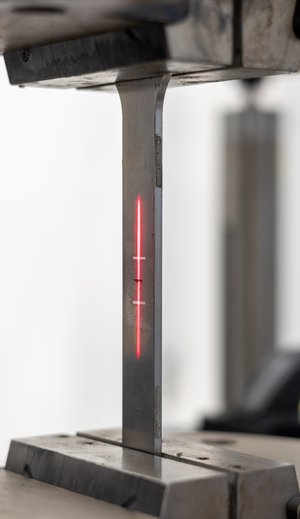
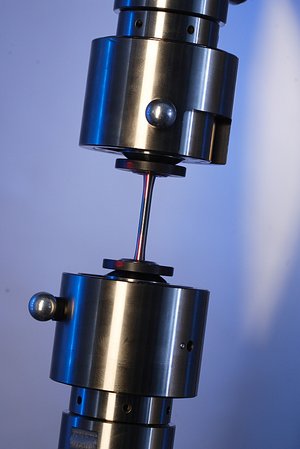
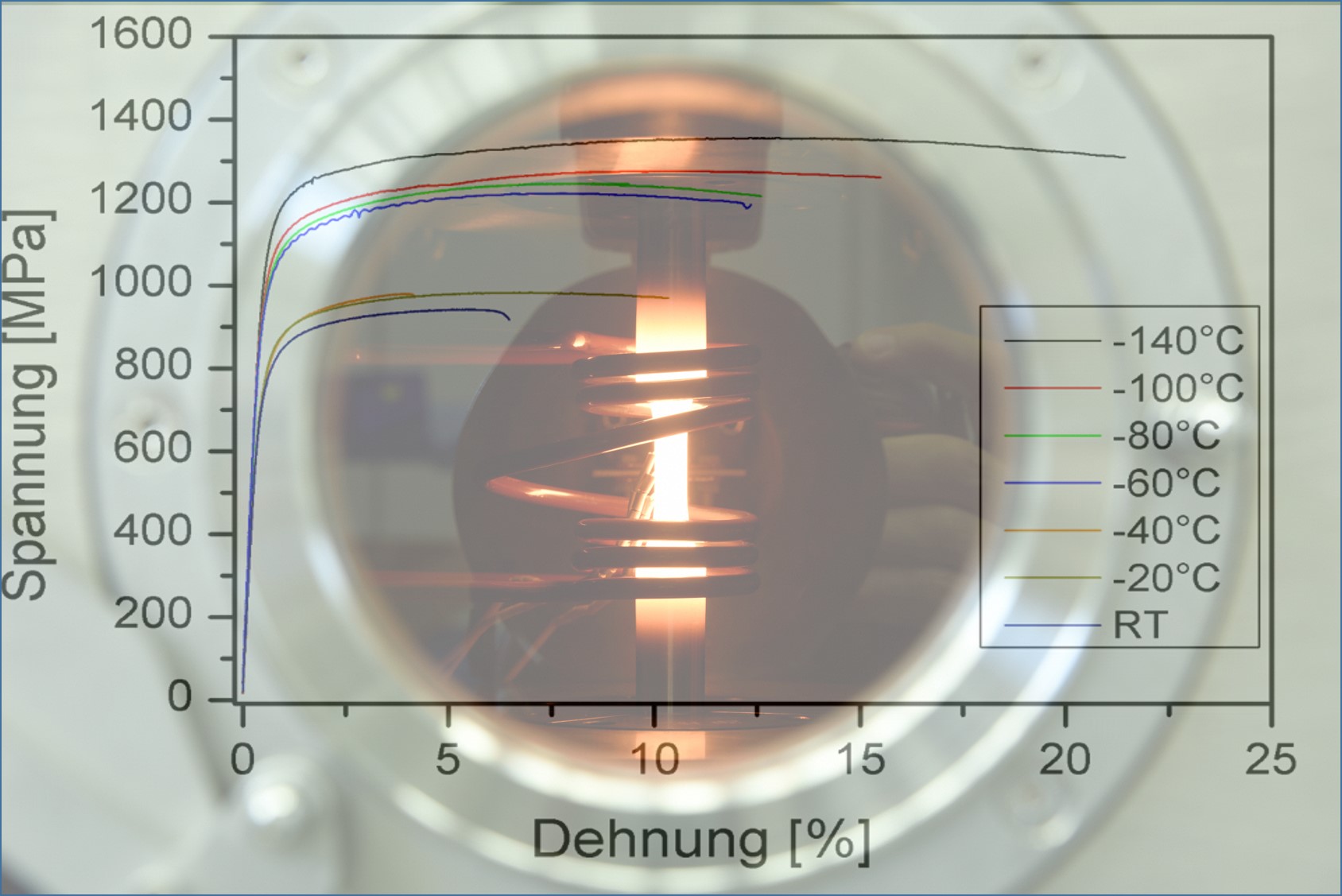
    Tensile, compression, and bending tests according to DIN/ISO/ASTM (from high to low temperatures)

  • Cyclic materials testing

    Cyclic–plastic material behaviour in low cycle fatigue / fatigue testing in high cycle fatigue

  • High-pressure hydrogen testing

    Material behaviour under H₂ exposure (autoclave testing up to 400 bar)

  • Fracture mechanics

    Crack growth, KIC, CTOD for safety-relevant components, etc.

  • Materials testing of microelectronic systems

    E.g. solder joints, coatings, etc.

Accredited testing according to ISO/IEC 17025

  • Hardness measurements according to EN ISO 6506-1 (HB), EN ISO 6507-1 (HV), EN ISO 6508-1 (HRC)

  • Tensile testing of metallic materials

    • At room temperature: EN ISO 6892-1, ASTM E8 / E8M, ASTM 370

    • At low temperatures: EN ISO 6892-3

    • At elevated temperatures: EN ISO 6892-2, ASTM E21

  • Fatigue tests on specimens according to DIN 50100, ASTM E466, ISO 1099

  • Fatigue tests on fasteners according to DIN 969

  • Fracture toughness testing KIC according to ASTM E399, ISO 12135

  • Fatigue crack growth according to ASTM E647, ISO 12108

  • Fracture toughness testing JIC, Jc, J–R, rc according to ASTM E1820 / ISO 12135

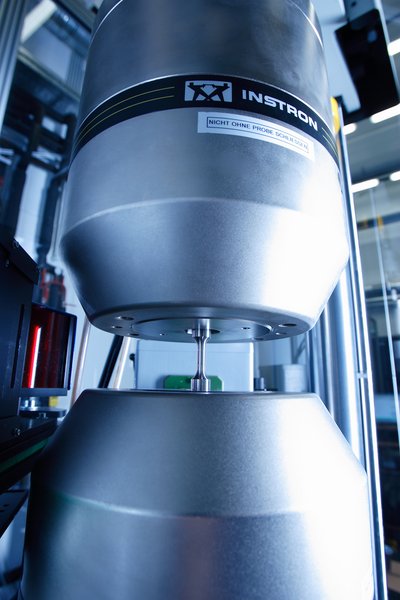
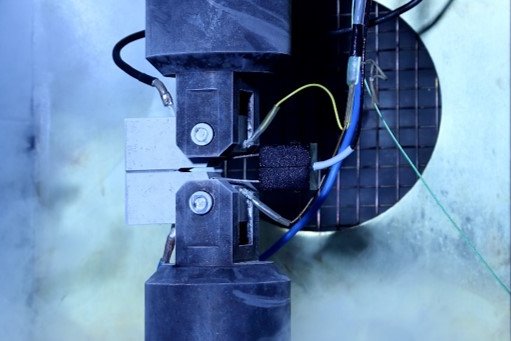
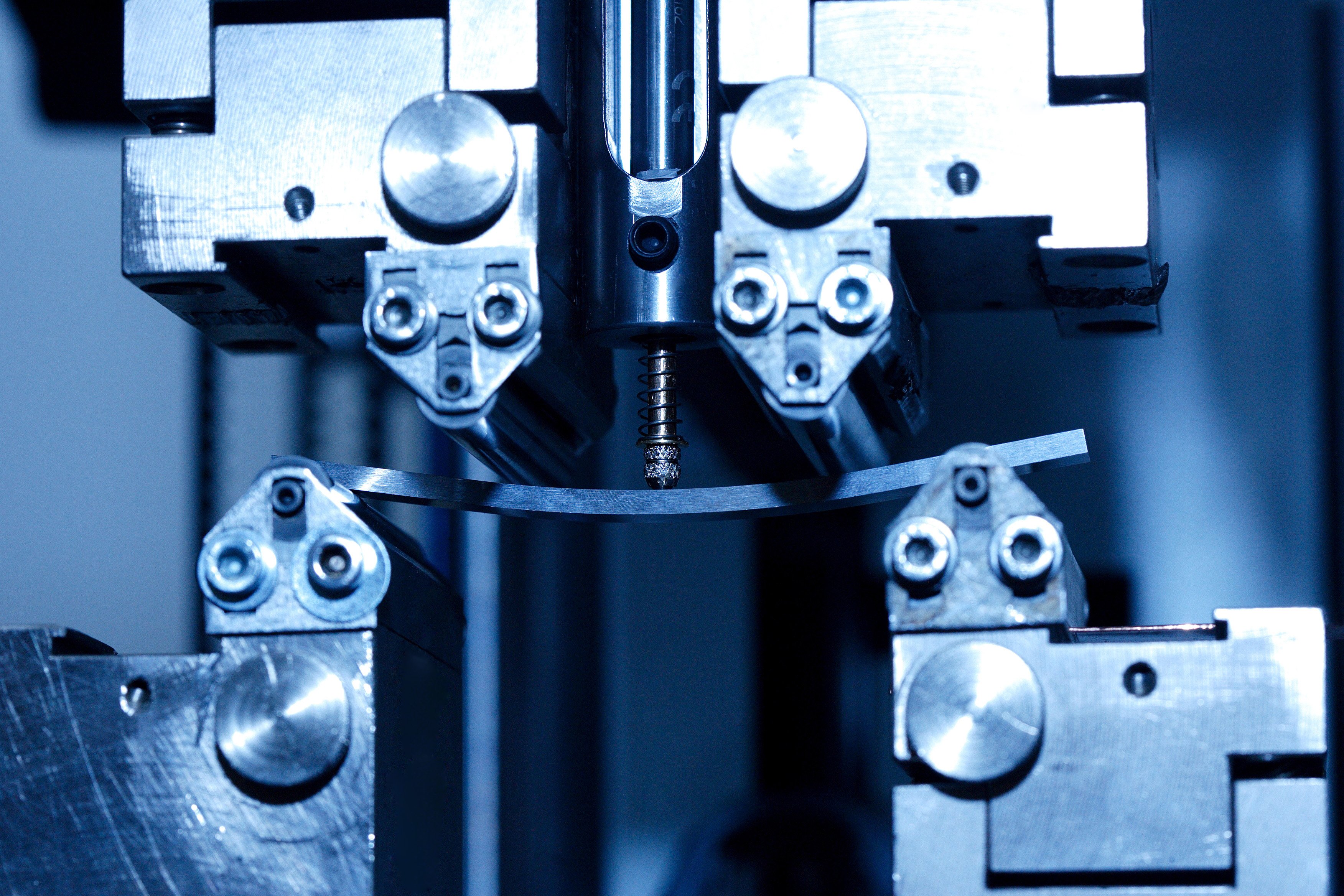
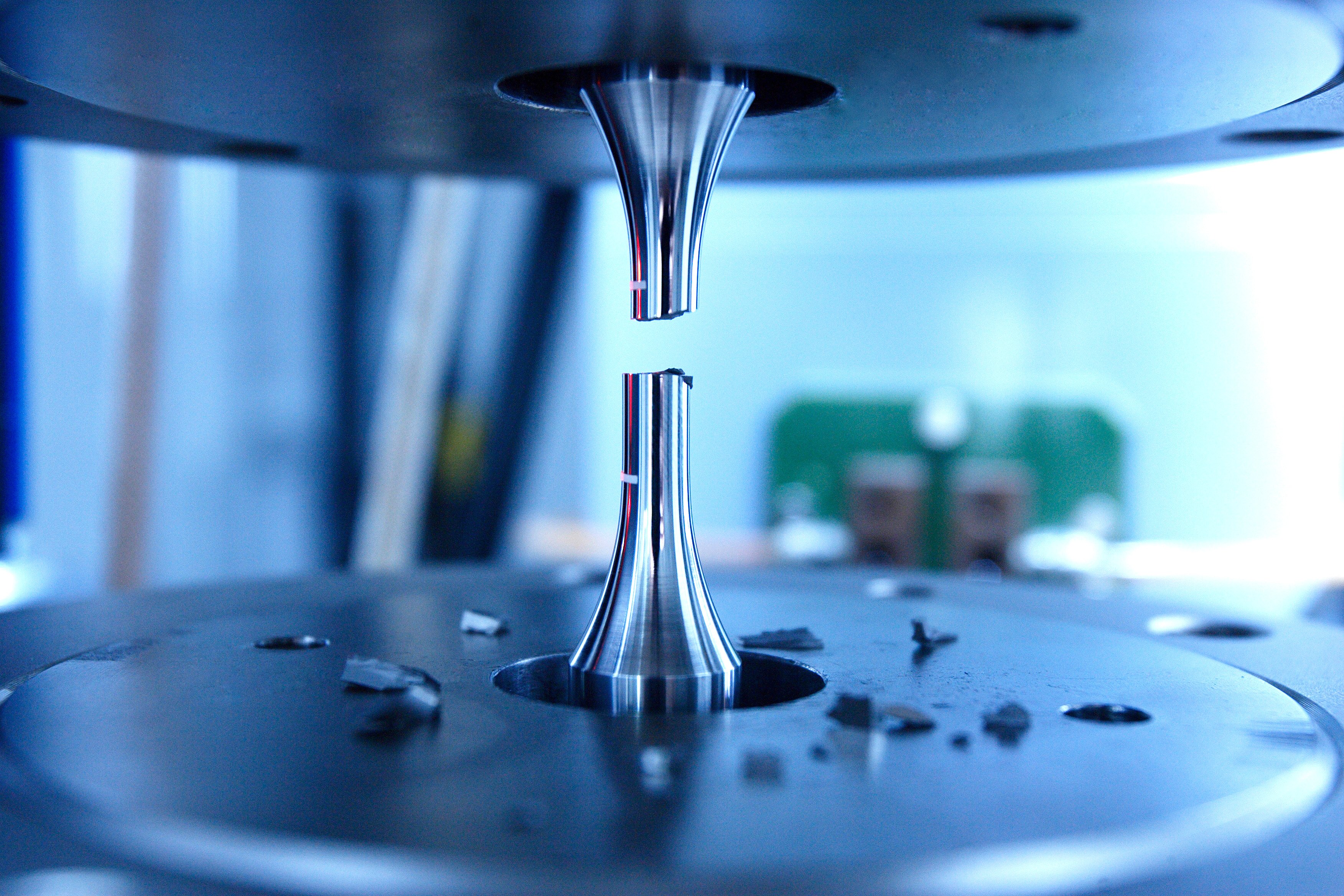
Photo Gallery - Mechanical Materials Testing

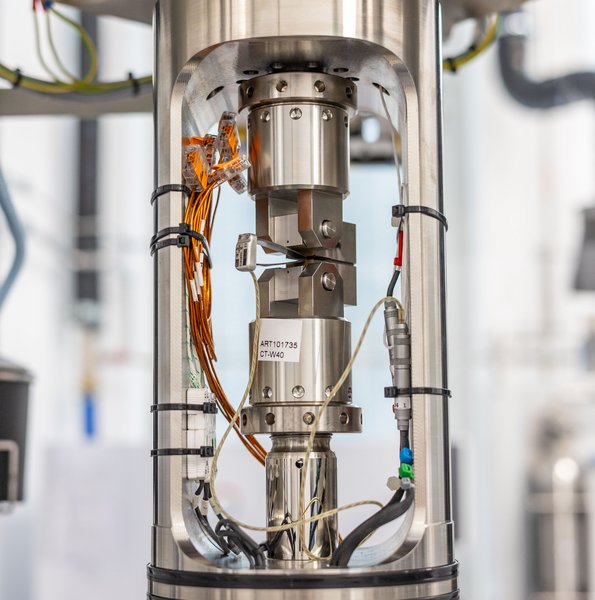
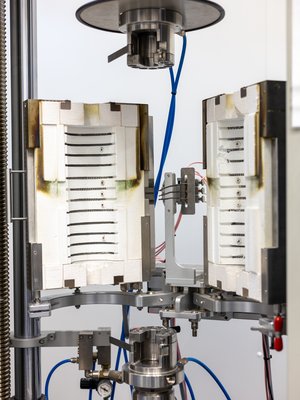
Fracture mechanics at low temperatures
Bending test
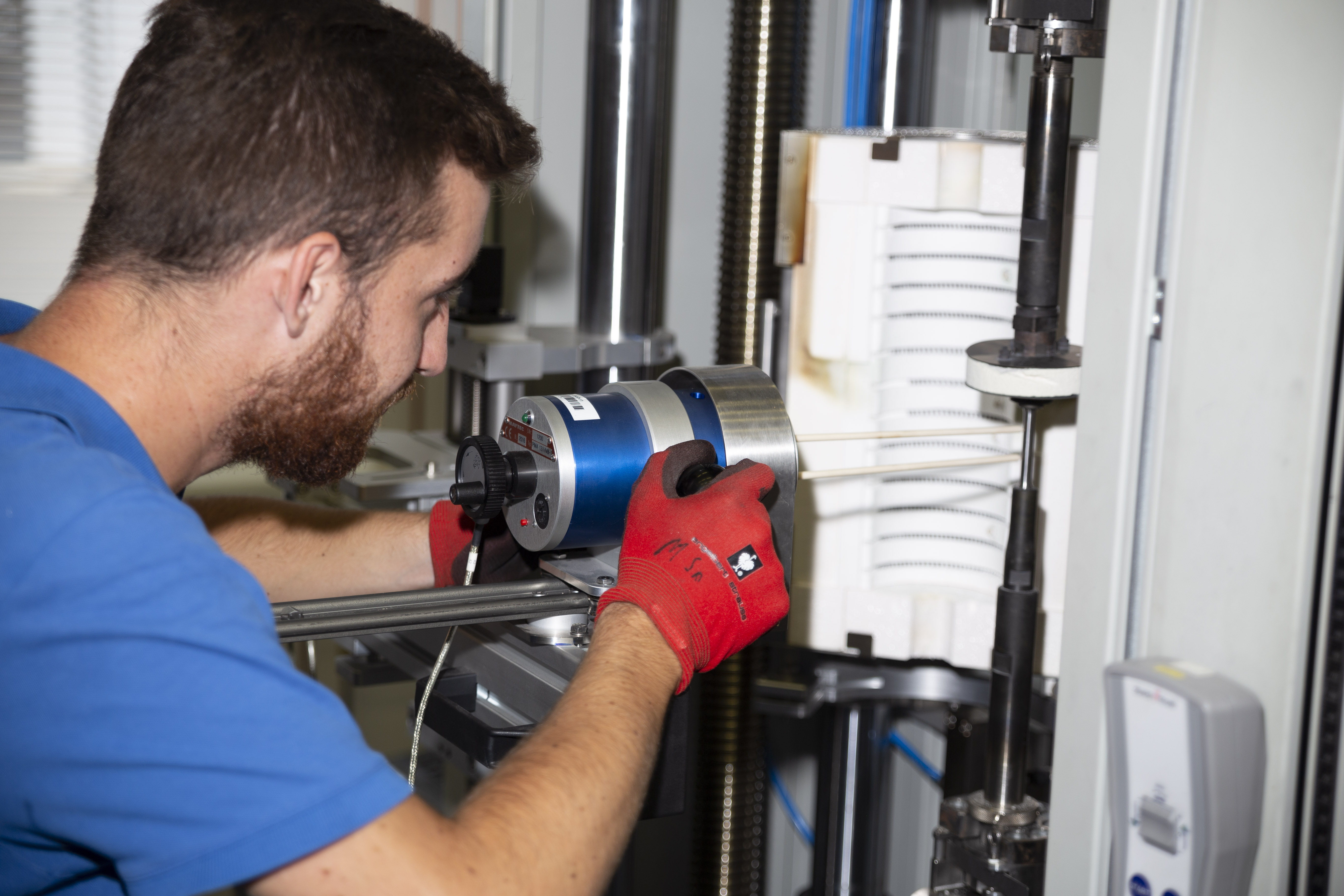
Accredited tensile test
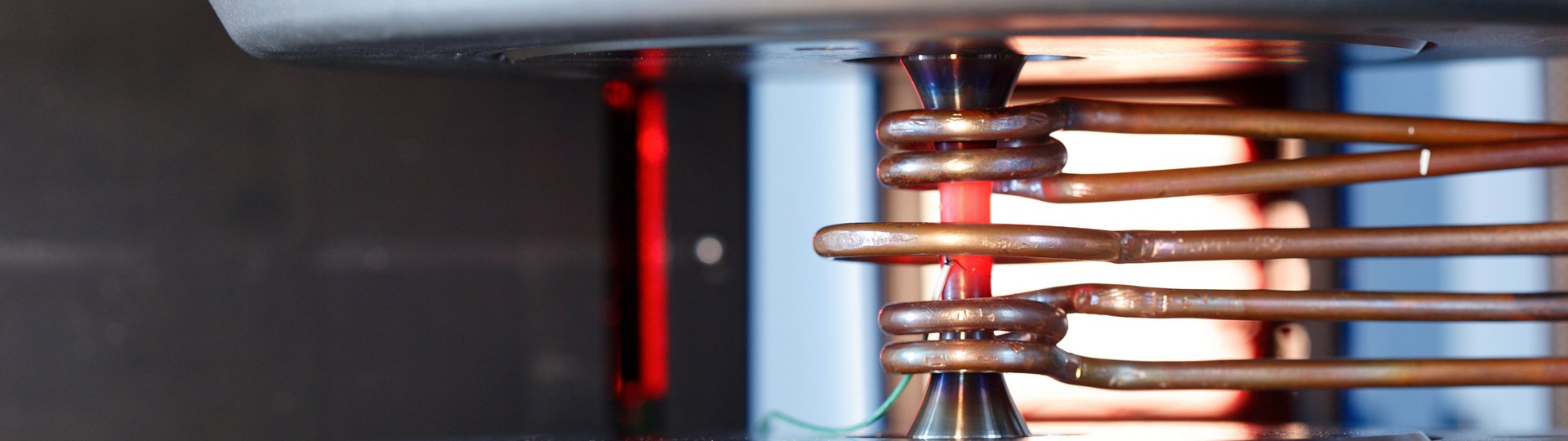
High-temperature testing
Precise strain measurement
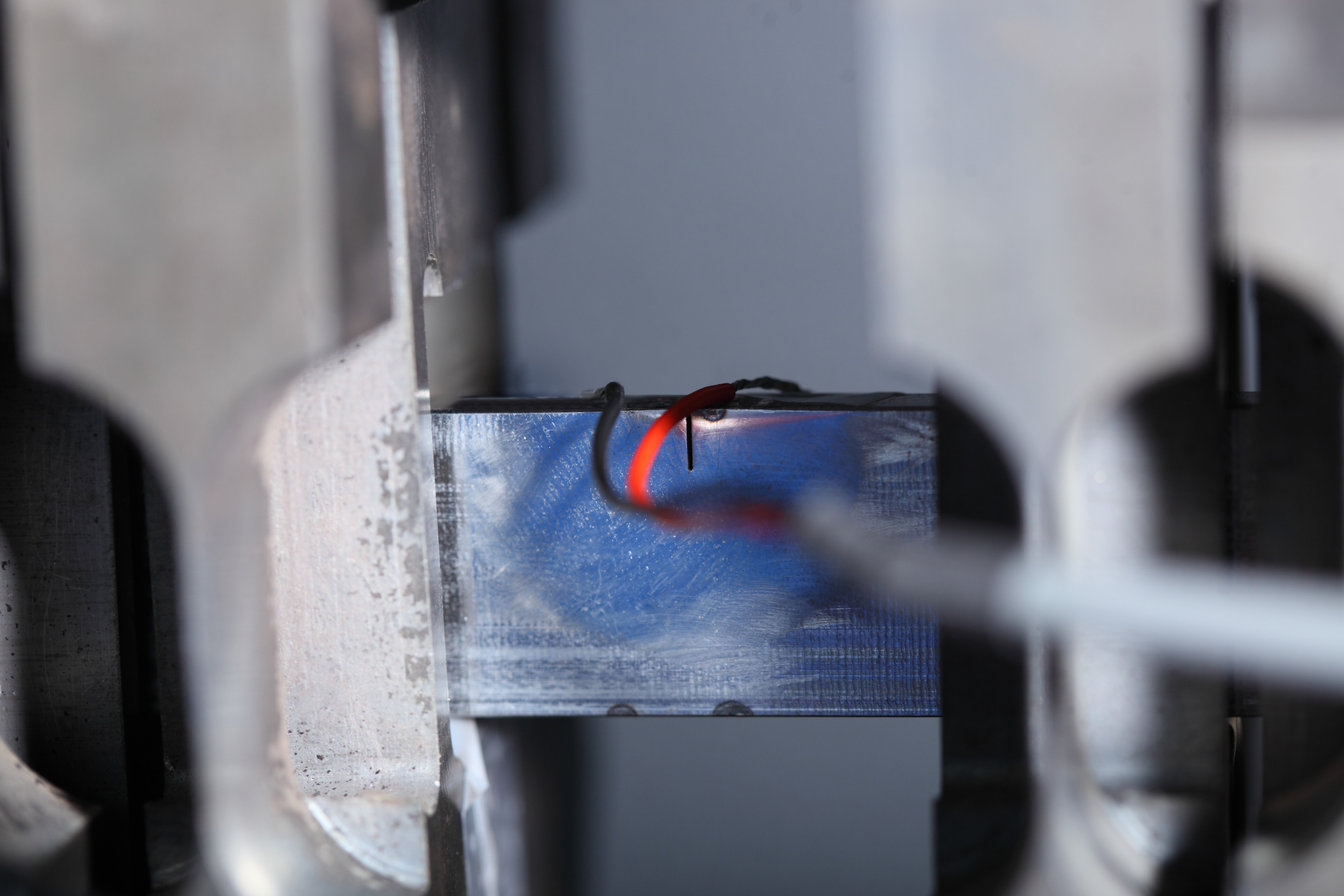
Crack propagation testing on SENB specimens

Our Services in Detail

Hardness Testing – Macro, Micro (e.g. Vickers, Brinell), Nano Hardness Measurements

Hardness Testing

We offer comprehensive hardness testing using all common methods – from macroscopic measurements to nanoindentation.

Available hardness methods

  • Vickers hardness (HV) – EN ISO 6507-1
  • Brinell hardness (HB) – EN ISO 6506-1
  • Rockwell hardness (HRC) – EN ISO 6508-1
  • Knoop hardness (HK)*
  • Martens hardness (HM) / instrumented indentation (nanoindentation)*

Testing services

  • Core hardness measurements
  • Hardness profiles or hardness mapping (e.g. after case hardening, nitriding, surface hardening)
  • Depth profiles for coatings and transition zones
  • Small samples / cross-sections
  • Testing according to DIN EN ISO and ASTM standards
  • Evaluation including documentation and test report

Typical applications

  • Metallic materials (steels, non-ferrous metals, alloys)
  • Coatings and thin films
  • Ceramics and composite materials
  • Heat-treated components
  • Welded joints

*Outsourced to MCL-approved cooperation partners
Static Materials Testing

Static Materials Testing

We provide precise, standards-compliant tests to determine mechanical material properties – including under extreme conditions.


Our capabilities

  • Tensile tests according to EN, ISO, and ASTM
  • Compression tests according to ASTM E9 and DIN 50106
  • 3-point and 4-point bending tests
  • Wide temperature range: from –150 °C to 1400 °C, standards-compliant even at high and low temperatures
  • Atmospheres: testing in air, inert gas, or vacuum
  • Combination with local strain analysis (ARAMIS) for detailed material insights
  • Flexible specimen preparation: testing of various geometries and dimensions, e.g. bars, sheets, or special components such as screws, bolts, bearing components


Key benefits

  • Reliable, standards-compliant results for materials development and quality assurance
  • Testing under extreme temperatures and special atmospheres
  • Ability to test finished components directly, not just standard specimens
  • Highly detailed analysis of local deformation and material behaviour


Examples from practice

  • Standards-compliant tensile and bending tests to verify mill certificates and qualify critical components such as shafts, flanges, or axles
  • High-temperature tensile tests on turbine materials up to 1200 °C
  • Tensile and bending tests on 3D-printed specimens (e.g. Inconel, titanium, stainless steel) to validate process parameters and build orientations
Fatigue Testing / Dynamic Material Testing

Low Cycle Fatigue (LCF)

Low Cycle Fatigue (LCF)

  • Strain-life (ε–N) curves according to ASTM E606 and ISO 12106
  • Cyclic stress–strain curves and cyclic creep for lifetime prediction
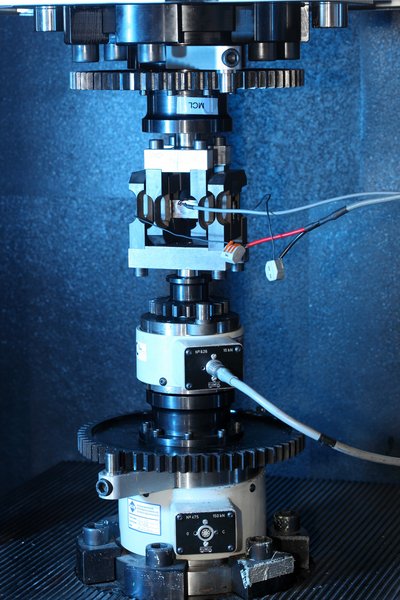
  • Tension/compression tests up to ±250 kN in a temperature range from –150 °C to 1400 °C
  • High-precision laser extensometry for exact strain and crack initiation data
  • Tests in vacuum, air, or protective gas atmosphere
  • Custom loading and block programs for customer-specific load spectra
  • Special tests: coupling thermal cycles (heating/cooling) with mechanical loading – ideal for analysing metastable phases or thermomechanical fatigue

Examples from practice

  • Lifetime tests on high-strength steels for turbine or drivetrain components
  • LCF testing of additively manufactured nickel-base alloys for aerospace applications
  • Investigation of cyclic creep behaviour of materials for high-temperature reactors
  • Special testing of the stability of metastable austenitic phases under changing temperature

High Cycle Fatigue (HCF)

Our HCF tests provide meaningful data on the fatigue and endurance strength of metallic materials. Whether for component development, material comparison, or lifetime assessment – we test in a standards-compliant, accredited, and practice-oriented way.

Test methods

  • High cycle fatigue tests within the scope of accreditation according to EN ISO 17025
  • Tests according to DIN 50100, ASTM E466, and ISO 1099
  • Types of loading: tension-compression, torsion, and bending (3-point, 4-point, 8-point)
  • Statistical evaluation of fatigue strength and endurance (S–N curves / Wöhler curves)
  • Special programs: multistep and block tests to simulate real loading profiles

Specialised equipment

  • Servo-hydraulic test machines with test frequencies up to 180 Hz
  • Precise temperature control for tests at low temperatures (–150 °C, N₂) and high temperatures (up to 900 °C, air)
  • Optical and laser-based strain measurement for high-resolution fatigue analysis
  • Customisable gripping and fixturing systems for a wide range of specimen and component geometries

Testing conditions

  • Temperature range: –150 °C to 900 °C
  • Atmospheres: air, protective gas, or vacuum
  • Frequencies: up to 180 Hz for efficient lifetime testing
  • Loading modes: axial, torsional, or combined

Typical applications / examples

  • Endurance testing of springs, screws, welds, and rotating components
  • Material comparison for purchasing and quality assurance (e.g. different steel heats or titanium alloys)
  • Evaluation of additively manufactured structures with respect to fatigue strength and process stability
  • Lifetime assessment of high-temperature components (e.g. turbine parts, exhaust systems)
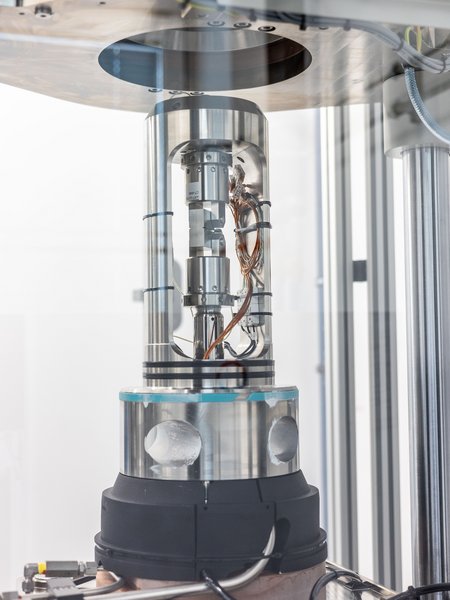
Materials testing in high-pressure hydrogen

Hydrogen Testing

  • Mechanical testing of hydrogen-charged specimens
  • Materials testing under pressurised hydrogen – hollow specimen technique
  • Materials testing in high-pressure hydrogen – autoclaves (up to 400 bar)

Materials testing in high-pressure hydrogen – autoclaves (up to 400 bar)

Configuration

  • H₂ charging: compressed gas (up to 400 bar)
  • Max. load capacity: ±100 kN
  • Temperature range: –50 °C to +150 °C
  • Special feature: crack length measurement using the DCPD method

Types of tests

  • CLT
  • Cyclic fatigue (LCF, low-frequency HCF)
  • Fracture mechanics tests (KIC, J–R curves, da/dN curve, ΔKth)

Fields of application (materials development and assessment of hydrogen embrittlement resistance)

  • Materials for hydrogen transport and storage
  • Materials for the automotive industry
  • Materials for fastening applications in hydrogen environments
Fracture Mechanics Testing

Fracture Mechanics Testing

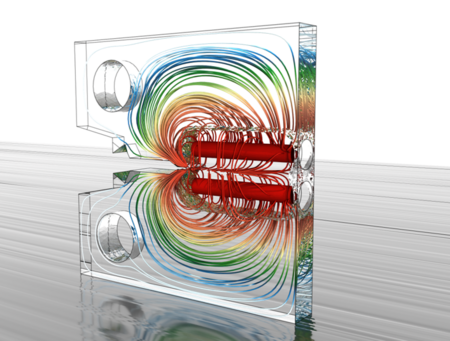
We perform static and cyclic fracture mechanics tests (partly within the scope of accreditation according to EN ISO 17025).

Our focus and expertise

  • Static fracture mechanics

    KIC, JIC, J–Δa curves, CTOD

  • Cyclic fracture mechanics

    da/dN curves

    Threshold determination

    Resistance curves (R-curves)

  • Various specimen configurations

    CT, SE(B), SE(T)

  • Temperature range

    From –150 °C to 800 °C

Materials Testing of Microelectronic Systems

Materials Testing of Microelectronic Systems

The mechanical characterization of electronic systems, their components, and interconnect technologies is crucial to ensure reliability and lifetime under real operating conditions. By analysing mechanical loading of solder joints, PCBs, and housings, weak points can be identified and both design and material selection can be specifically improved. This ensures that the mechanical stability of components and connections is optimally aligned with the electrical functionality of the overall system.

Mechanical Testing / Bond Testing

We characterize the mechanical properties of materials used for manufacturing microelectronic components as well as simple and complex assemblies.

Our focus and expertise

  • Determination of interfacial strength in various materials, e.g. by shear tests, pull tests, or wedge tests
  • Reliability tests (creep tests, cyclic loading)
  • Characterization of wire bonds (pull tests on wires from 20 to 400 μm diameter, shear tests, etc.)
  • 3-point and 4-point bending tests up to 1000 N for a wide range of materials (e.g. wafers, PCBs, etc.)

Dynamic Mechanical Analysis

Dynamic mechanical analysis (DMA) characterizes the viscoelastic or “rheological” properties of solids and liquids.

Our focus and expertise

  • Creep and creep recovery
  • Stress relaxation
  • Stress ramps
  • Shear rate ramps
  • Iso-strain and iso-stress tests
  • Fatigue tests with freely defined waveforms

Mechanical Materials Testing – Your Direct Contact

Knowledgeable experts who understand your project – and help make it a success.

Dr. Stefan Marsoner Head of Services

Dr. Florian Summer Service Solution Manager

Dr. Angelika Spalek Service Solution Managerin