
Materials Center Leoben Forschung GmbH

Thermal, Physical & Electrical Analysis

Do you want to precisely determine the thermal conductivity, thermal impedance, or electrical parameters of your materials or composites? Are you interested in the thermophysical properties of your materials, for example to evaluate heat dissipation, layer quality, or material bonding?

Then you’re in the right place.
Our project managers and experts offer precise and reproducible techniques to evaluate heat and current transport, material homogeneity, as well as layer and interface quality.

Our Services at a Glance:

  • Thermal Impedance Analysis

    Thermal conductivity and thermal resistance of materials and especially composite systems

  • Scanning Thermal Microscopy – SThM (AFM)

    Spatially resolved thermal conductivity measurements at the nanometre scale

  • TDTR (Time Domain Thermoreflectance)

    Thermal properties of ultra-thin layers and interfaces

  • EPIC/EPAC (AFM)

    Characterisation of electrical potentials, conductivity, and charge carrier distribution from the micro- down to the nanometre scale

  • Electrical Materials Analysis

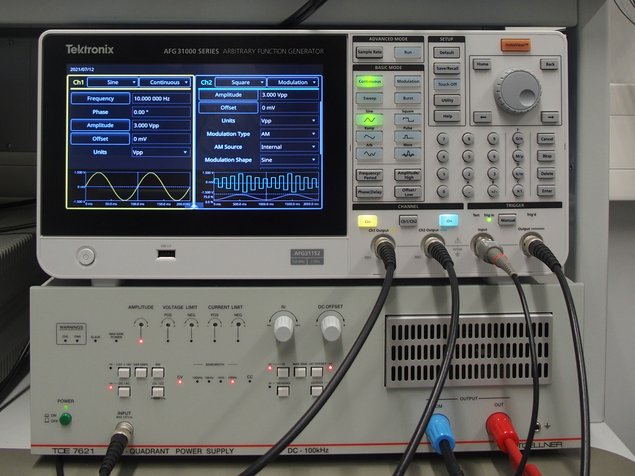
    Determination of macroscopic electrical properties such as resistance, conductivity, permittivity, or dielectric strength

  • Determination of Thermophysical Properties

    Determination of thermophysical properties of materials
    (e.g. density, dynamic Young’s modulus, thermal diffusivity, thermal expansion, heat capacity)

Photo Gallery – Thermal, Physical & Electrical Analysis

Our Services in Detail

Thermophysical Measurements

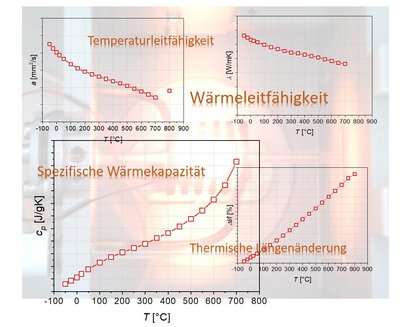
Determination of Thermophysical Properties

We determine the fundamental thermophysical properties of metallic and ceramic materials and their composites.

Our focus & expertise

  • Determination of thermal diffusivity (–60 °C to 1200 °C) according to EN 821-2 (1997)
  • Measurement of thermal expansion of solids (–150 °C to 1200 °C) according to DIN 51 045-1 (2005)
  • Measurement of specific heat capacity (–150 °C to 1100 °C) according to EN 821-3 (2005)*
  • Measurement of dynamic Young’s modulus (20 °C to 900 °C) according to EN 820-5 (2009)*
  • Calculation of temperature-dependent thermal conductivity
  • Measurement of electrical resistance/conductivity (20 °C up to the melting point of metallic samples)*

*In cooperation with the Austrian Foundry Institute (ÖGI)
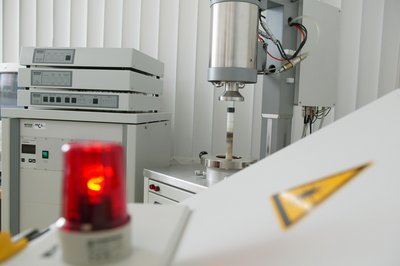
Thermal Impedance Analysis (Rth)

Thermal Impedance Analysis (Rth)

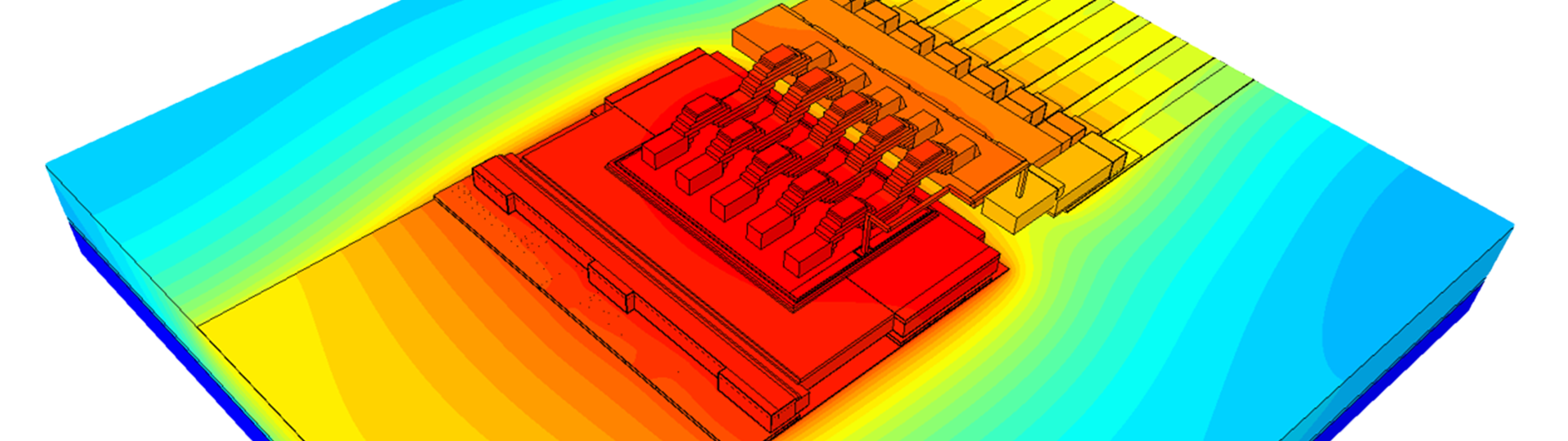
Thermal impedance analysis enables precise evaluation of heat flow behaviour in electronic components and systems. By determining thermal resistances and capacitances, hotspots, material transitions, and cooling concepts can be specifically analysed. This makes a key contribution to optimising heat dissipation, increasing reliability, and extending the service life of electronic components.

Example applications

  • Characterisation of semiconductors and devices
    • Determination of RthJA, RthJC, RthJB
  • Identification of hotspots and thermal bottlenecks
  • Benchmarking of different packages, manufacturing processes, and technologies
  • Validation of manufacturing processes, solder quality, or bonding
  • Identification of damage or ageing effects in the thermal path
  • Investigation of contact/interfaces and mounting quality
  • Evaluation of thermal interface materials (TIM) – pastes, graphite, phase-change materials, etc.
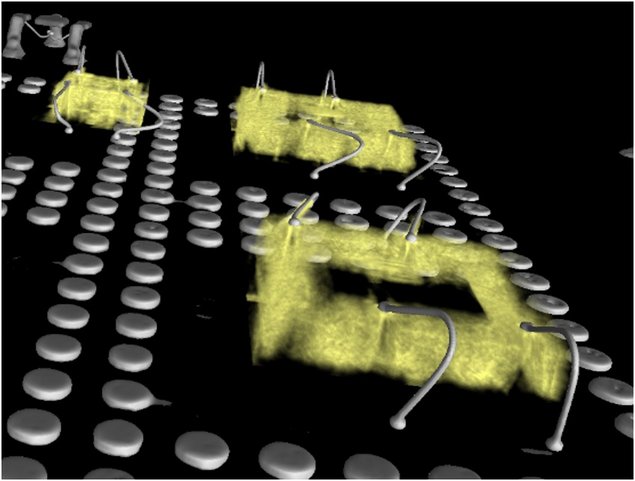
  • Detection of voids, delamination, or poor thermal contact
  • Detection of air gaps, incomplete contact, or mounting defects
  • Optimisation of clamping force, surface roughness, and assembly procedures

Ageing & reliability analysis

  • Monitoring ageing processes (e.g. TIM pump-out, bond ageing)
  • Thermal fingerprints for condition monitoring
  • Before/after comparisons under power cycling, thermal cycling, structural shifts

Heatsink development and optimisation

  • Evaluation of heat dissipation efficiency
  • Analysis of temperature distribution and identification of hotspots
  • Optimisation of heatsink design, materials, and mounting concepts


SThM (Scanning Thermal Microscopy – AFM)

Scanning Thermal Microscopy (SThM) enables high-resolution, local measurements of temperature distributions on micro- and nanostructures. This makes it possible to directly visualise thermal hotspots, local thermal conductivities, and energy flow paths. The method is especially valuable for understanding the thermal behaviour of modern electronic components and optimising their design for efficiency and reliability.

TDTR (Time Domain Thermoreflectance)

Time Domain Thermoreflectance (TDTR) allows precise determination of thermal conductivities and interface resistances in thin films and nanoscale materials. Using an ultrafast, laser-based measurement technique, even extremely small heat flows can be resolved in time and material-dependent properties can be clearly characterised. TDTR is therefore a key tool for understanding the thermal behaviour of modern micro- and nanostructures and optimising them for high-performance, reliable electronic systems.

Electrical Materials Analysis

Electrical materials analysis enables detailed investigation of conductive, dielectric, and semiconducting properties of materials. This allows identification of defects, charge carrier densities, and material transitions that are critical to the performance of electronic components. These analyses support targeted optimisation of materials and technologies to develop more reliable and efficient electronic systems.

EPIC/EPAC (AFM)

EPIC/EPAC methods enable high-resolution electrical characterisation of semiconductors and device structures directly in the electron microscope. By analysing charge-carrier-based currents, defects, inhomogeneities, and material transitions can be precisely localised. These methods provide valuable information for optimising manufacturing processes and increasing the reliability of modern micro- and nanoelectronics.

Thermal, Physical & Electrical Analysis – Your Direct Contact

Knowledgeable experts who understand your project – and help make it a success.

DI Petri Prevedel Service Solution Manager

Dr. Julien Magnien Service Solution Manager

Bernhard Sartory Service Solution Manager