Materials Center Leoben Forschung GmbH

Microstructure, Phase & Material Defect Analysis

Are you looking for a testing laboratory for metallographic analyses of metallic materials and microstructure analysis? Do you want to assess the cleanliness of your materials? Are you particularly interested in the microstructure of heat-treated components and how it changes due to thermal loading in service (e.g. precipitation formation)?

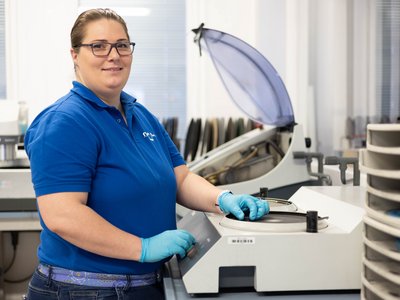
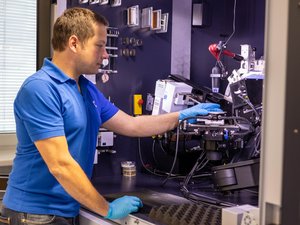
Then you’re in exactly the right place. The project managers and experts at MCL support you in metallography, microstructural analysis, and material defect evaluation.

Our Services at a Glance

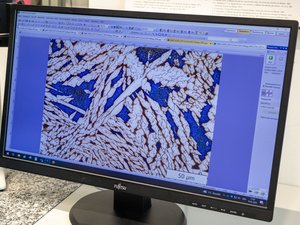
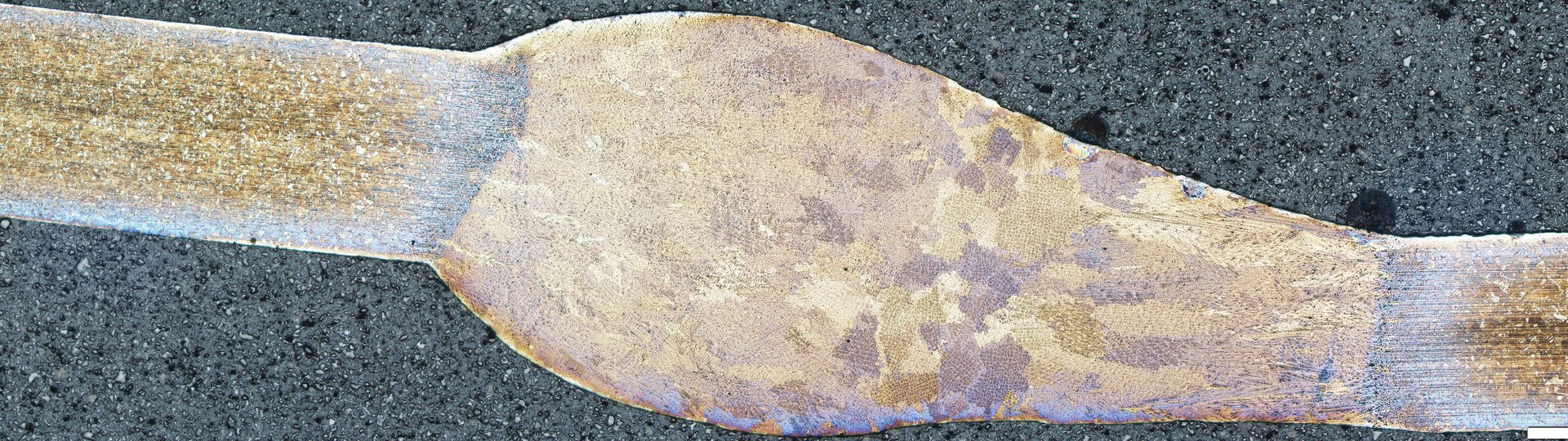
  • Metallography & Light Microscopic Microstructure Analysis
    For the assessment of microstructural features such as phases, precipitates, pores, or cracks.
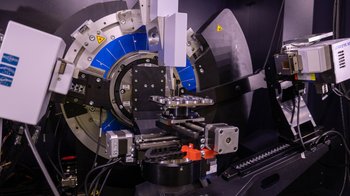
  • Phase Analysis / XRD (X-ray Diffractometry)
    Identification and quantification of crystalline phases – ideal for understanding phase transformations or textures.
  • High-Resolution Materials Analysis (SEM)
    Detailed microstructure and defect analysis down to the nanometer scale.
  • CT (Computed Tomography)
    3D imaging of the component interior without destruction – for detecting shrinkage cavities, cracks, or inclusions.
  • SAM (Scanning Acoustic Microscopy)
    Acoustic microscopy for analysing delaminations, cracks, or voids – particularly in electronic components.

Accredited Measurements According to ISO/IEC 17025

Determination of Retained Austenite Content According to ASTM E975

Retained austenite influences the hardness, toughness, and dimensional stability of components. Its content is specifically controlled to reliably manage the service life, deformation behaviour, and quality of heat-treated steels.

Benefits:

  • Standards-compliant precision – reliable and reproducible results
  • Targeted materials control – management of hardness, toughness, and dimensional stability
  • Quality assurance – robust data for product approval and process control
  • Process optimisation – a solid basis for heat treatment and distortion control

Applications:

  • Testing of heat-treated steels
  • Product and process development
  • Failure analysis of components
  • Validation of material models for simulations

Our services in detail

Metallography & Light Microscopic Microstructure Analysis

Metallography & Light Microscopic Microstructure Analysis

Characterization of the microstructure and microstructural composition of structural components and functional parts.

Our Focus Areas / Expertise

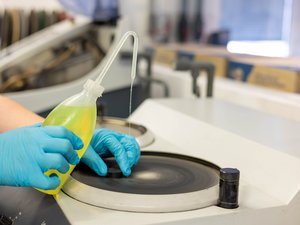
  • Microstructure presentation and documentation
  • Comprehensive range of etching techniques (chemical and electrochemical) for steels, non-ferrous metals, hard metals, etc.
  • Evaluation according to a wide variety of standards

    • Cleanliness assessment according to DIN 50602, ASTM E45, 
      DIN EN 10247 and ISO 4967
    • Assessment of carbide banding and carbide networks according to SEP 1520
    • Grain size determination according to DIN EN ISO 643 and 
      ASTM E112
    • Surface decarburization according to DIN EN ISO 3887


Phase Analysis / XRD (X-Ray Diffraction)

Phase Analysis / XRD (X-Ray Diffraction)

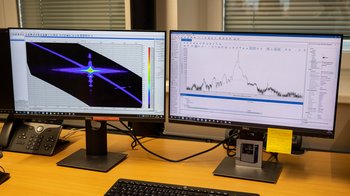
Qualitative and Quantitative Phase Analysis

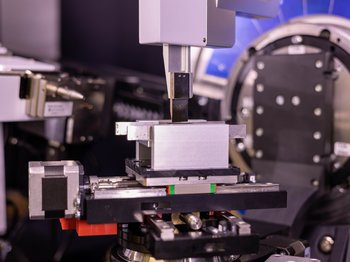
X-ray determination of phase composition and structural parameters at room temperature (partly within the scope of accreditation according to EN ISO 17025)

  • Qualitative and quantitative phase analysis (incl. Rietveld method)

  • Determination of lattice parameters (lattice constants, defect density, crystallite size)

  • Determination of retained austenite content according to ASTM E 975 (within accreditation) or via Rietveld method (laboratory and on-site)

  • Analysis of waviness, reflectometry (e.g., on microelectronic components)

  • Examination of metals, ceramics, and coatings

High-Temperature Properties and Phase Transformations

Determination of phases, phase transformations, structural parameters, and residual stresses at elevated temperatures and under various atmospheres

  • Determination of crystallographic structural parameters as a function of temperature
  • Identification of phase transformations such as magnetic transitions, lattice transformations, melting points, and glass transition temperatures
  • Monitoring of phase changes caused by annealing processes
  • Detection of phase reactions (e.g., oxidation, decomposition)
SAM (Scanning Acoustic Microscopy)

SAM (Scanning Acoustic Microscopy)

Scanning Acoustic Microscopy (SAM) enables non-destructive inspection of internal structures and defects in materials and electronic components. By using ultrasonic waves, delaminations, cracks, and inclusions can be detected with high depth resolution. This technique is particularly valuable for quality control and reliability analysis in microelectronics and materials testing.

  • Non-destructive, ultrasound-based imaging.

  • Reconstruction of internal structures and defects.

Our focus areas / expertise

  • Failure analysis

  • Analysis of components and materials

  • Target/actual comparisons

CT (Computed Tomography)

Computed Tomography (CT)

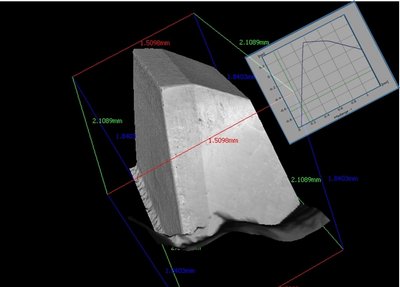
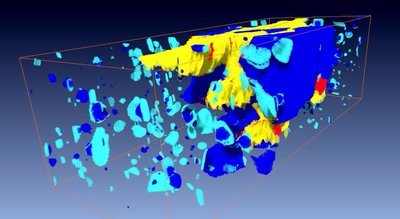
Computed tomography (CT) enables three-dimensional, non-destructive analysis of the internal structure of components and materials. It provides precise information on pores, cracks, and structural defects that are often inaccessible using conventional methods. CT therefore makes a significant contribution to quality control, process optimization, and reliability assessment in materials and electronics research.

  • Non-destructive, X-ray-based 3D imaging.
  • Reconstruction of volumes, internal structures, and defects.

Our focus areas / expertise

  • Failure analysis
  • Examination of components and materials
    • Weld seam inspection for pores, inclusions, bonding defects, etc.
    • Analysis of joining technologies (pores, cracks, geometry, etc.)
    • Inspection of additively manufactured components (porosity)
  • Target/actual comparisons
High-Resolution Electron Microscopy

High-Resolution Electron Microscopy

  • High-resolution microstructural characterization with magnifications up to 1,000,000x.
  • Various electron and ion contrast modes, EBSD crystallographic information mapping
  • Measurement of crystal structure using EBSD from the centimetre scale down to structures as small as 20–30 nm
  • Determination of local chemical composition, elemental distributions, and particle analysis (EDX, WDX, XRF, FIB-SIMS (TOF))
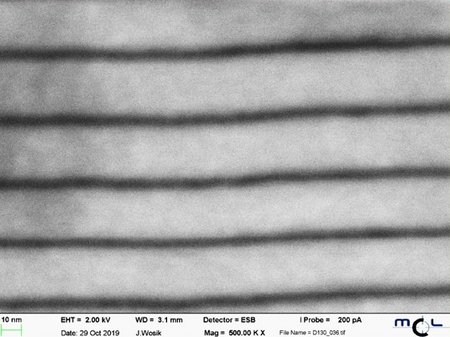
  • Visualisation of the layer structure of multilayer coatings

In-situ Temperature Transformation Analysis

High-resolution documentation of transformation kinetics of individual phase fractions.

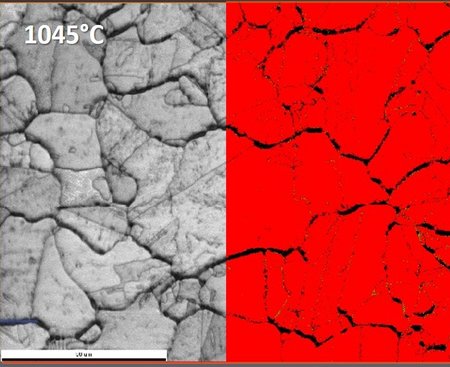
  • In-situ heating and cooling experiments in the scanning electron microscope
  • Temperature range: –180 °C to 1045 °C

Heating rates:

  • 180 °C to 400 °C: up to 20 °C/min
  • 250 °C to 1045 °C: up to 250 °C/min
  • Temperature-dependent residual stress measurements on coatings
  • Analysis with different detectors (including EBSD)

3D Microstructure and Contour Analysis

High-resolution 3D visualisation and measurement of contours and microstructural features.

Our Focus & Expertise

  • 3D topography of contours, damage, etc., including dimensional measurement from the millimetre down to the sub-micrometre range
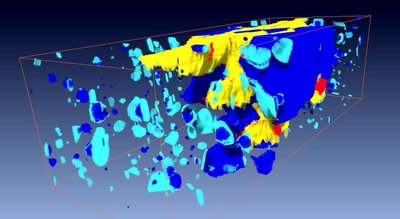
  • 3D tomography of microstructural constituents using the Slice & View method, including local chemistry and structure analysis
  • Various electron and ion contrast modes, EBSD crystallographic mapping, 3D elemental distributions, and depth profiles (EDX, EBSD, and FIB-SIMS (TOF))

Microstructure and defect analysis - Your contacts

Dr. Angelika Spalek Service Solution Managerin

Bernhard Sartory Service Solution Manager

Ing. Robert Peissl Service Solution Manager